


When we reach our 30s, our thoughts and priorities start to shift. Careers gain stability, families gain size, and generally life begins to weight health more towards the top of our thinking. And while this change can be viewed positively, this is also the time many are likely to begin ignoring their routine health check-ups thinking that feeling good somehow equals being healthy. And yet, it is at this stage in life where many health concerns begin, things such as diabetes, thyroid imbalance, liver problems, and cholesterol abnormalities will all likely start at this life stage. Here is where preventive health screening is so important. Aarna Diagnostic Centre is dedicated to accurate and timely diagnostics of health, marshalling new technologies for the patient’s benefit, and a robustly trained team who are committed to not just diagnostics, but outstanding healthcare to patients and their families. Aarna Diagnostic Centre is focused on health promotion as part of its mission as a healthcare provider by way of community outreach, working in tandem with other healthcare providers, and through ethical practice that works towards a healthier and sustainable community for the benefit of all. Below, is the highlighted 10 of the most important blood tests for you to consider annually, as you transitioned to your 30s, which will provide you important information about your health status.
The Complete Blood Count (CBC) is one of the most basic, and vitally most, important tests someone can have. It is a count of red blood cells, white blood cells, and platelets, giving you a total picture of blood health. An abnormality could indicate anemia, infection, inflammation, and even certain blood cancers.
In our increasingly fast-paced society, diabetes is becoming much more common even amongst younger adults. Fasting Blood Sugar (FBS) and HbA1c are key tests used to assess your control of glucose. FBS is the measurement of blood sugar levels after fasting. HbA1c is a measurement of your average blood sugar over 3 months.
High values indicate poor management of your glucose levels and it is as an indicator of increasing your risk of diabetes. Early detection of FBS and HbA1c can allow for exercise and changes to your nutrition, or medications to reduce the risk of people developing long-term complications.
Heart disease, with many cases of early onset attributed to abnormal cholesterol, is one of the leading causes of premature death in India. A Lipid Profile measures total cholesterol, LDL (bad cholesterol), HDL (good cholesterol) and triglycerides.
Increased LDL and/or triglycerides increases risk for heart attack and stroke. Decreased HDL means less protection against heart attacks and other heart disease. Regular monitoring of cholesterol provides opportunities to identify risk early and make changes to your lifestyle first before it becomes a problem.
The liver is responsible for detoxification, metabolism and other functions. Modern lifestyles that include processed food, alcohol, and stress can affect its performance.
A Liver Function Test evaluates enzymes such as SGOT, SGPT, ALP, and bilirubin levels. Abnormal test results may be suggestive of liver inflammation, fatty liver, or hepatitis. Identifying liver problems early may allow for dietary and/or medical treatment which can reduce the chances of serious complications.
The kidneys help filter waste and toxins and maintain proper fluid and electrolyte balance in the body. Conditions such as hypertension, diabetes, and excessive salt intake, can impair kidney function silently.
Kidney function test (KFT) which measures parameters such as creatinine, blood urea nitrogen (BUN), and uric acid levels. The prolonged increase of these values typically reflects a decline in kidney function. Early identification of these issues could delay long-term kidney conditions through medication intervention and lifestyle intervention.

The thyroid gland has an important role in metabolism, growth, and energy levels. Disorders of the thyroid gland can happen in both men and women, but are particularly common in women around the age of 30 or later in life.
The thyroid function test is used to measure T3, T4, and TSH levels, and help identify either hypothyroidism (under-active) or hyperthyroidism (over-active). Symptoms that include fatigue, unexplained weight loss or gain, hair loss, and change in mood can all be associated with a thyroid issue. Early identification of a thyroid issue can help identify potential treatment avenues with medication intervention and continued follow-ups.
Vitamin D and Vitamin B12 deficiencies happen to be one of the most prevalent health issues in society today. The absence of strong sunlight and a poor diet can contribute to this problem.
A Vitamin D deficiency can yield bone weakness, muscle weakness, and less immunity. A low Vitamin B12 level can lead to fatigue, tingling (especially in the limbs), mood changes, etc. Testing supplements reflectors and areas of deficiencies periodically (at least once a calendar year) can help to restore one to that feeling of vitality and energy that lives within us all.
Calcium is important for bone strength/health and muscle function. Iron is necessary for the transport of oxygen in the body and energy production. A lack of calcium can lead to brittle bones, whereas a lack of iron may lead to anemia and chronic fatigue.
Iron studies (serum ferritin/TIBC) and serum calcium tests are used to detect underlying anemia or assess bone health. These tests become especially important for women in their 30s to identify early signs of anemia and osteoporosis.
Hormones regulate everything from our metabolism, stress response, fertility, and emotional/behavioral balance. After 30, we see subtle changes in hormones, especially in women.
Annual testing of FSH, LH, estrogen, progesterone, and prolactin helps assess reproductive health and identify disorders like PCOS or other hormonal imbalances that lead to irregular cycles. Men also benefit from testing testosterone to assess energy levels and mood changes. Hormonal profiled testing helps with early identification and better management of our reproductive health and metabolism.
Inflammation is the root of many chronic diseases which include, but is not limited to diabetes, arthritis, and heart disease. Tests such as C-Reactive Protein (CRP) and Erythrocyte Sedimentation Rate (ESR) can help assess for inflammation levels stay within healthy limits.
Those with a family history of heart disease may benefit from Troponin or BNP tests to help assess the level of strain on the heart muscle. These tests, especially when combined, allow early detection of inflammation levels and strain on the heart to help with secondary prevention strategies that will help protect cardiovascular health long-term.
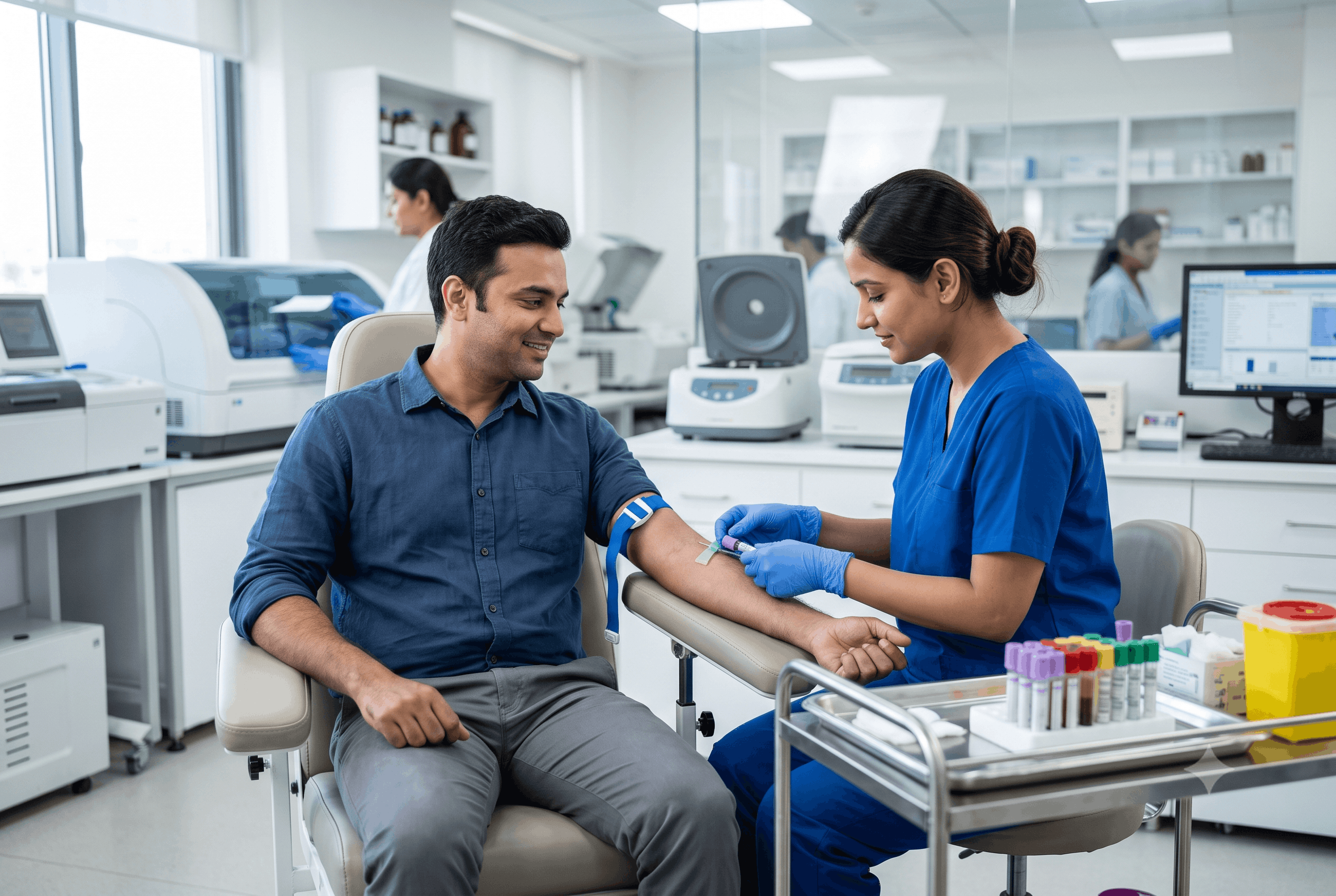
As people age, the body’s metabolism slows significantly, while the effects of stress, an inadequate diet, and erratic sleep become increasingly evident. Chronic diseases often develop in silence over years well before symptoms arise. Annual blood tests help you establish a baseline for your health, track any changes over time, and identify potential hidden conditions before they develop into a significant challenge.
Advanced tests can find subtle abnormalities before anything significant happens, allowing patients to practice early medical intervention or change their lifestyle. Throughout this process, periodic tests enhance your awareness not only to prevent disease but to better understand your body’s own individual health needs.
The follow-up process here is founded upon preventative care and precision. Aarna Diagnostic Centre has the most advanced technology coupled with professional human analysis to provide thorough and accurate results to all diagnostic exams. Highly trained professionals ensure that every sample is handled in an efficient manner ensuring complete confidentiality and accuracy.
Within 24 to 48 hours of testing, patients receive their reports in summary form, allowing timely follow-up with their physician. The centre creates a space of comfort with open communication with patients, helping to educate and promote healthy choices for the individual.
The team at Aarna Diagnostic Centre focus on prevention awareness and partner with medical practitioners to create a healthier community.
Reaching the age of 30 signifies a new period in life where preventive health care becomes crucial. The most effective approach to staying ahead of potential health issues is through routine blood testing. These tests offer an all-encompassing view of your internal health, from assessing cholesterol and blood sugar to evaluating your vitamin, thyroid, and hormone levels.
Routine maintenance check-ups enhance the likelihood of early detection, which leads to ideal management of simply your symptoms or immediate recovery with long-term good health and wellness. Adopt a proactive approach to today to prevent undo complications tomorrow.
The most important part of caring for yourself is being informed, remaining vigilant, and prioritizing your health throughout your lifetime. Aarna Diagnostic Centre remains a trusted partner in your better health journey through advanced diagnostics, expert care, and a commitment to early detection when possible.
Your health is your best investment. Be sure to monitor it, and strive to live not just a long life, but a life that is healthy and fulfilling as well.
Convenient Tests right at your Doorstep!


86, Kargi – Patel Nagar Bypass, near Palm City, Adarsh Vihar, Brahmanwala, Dehradun, Uttarakhand 248001
1, Maharani Bagh Lane, Ballupur Chowk, Ashirwad Enclave, Ballupur, Dehradun, Uttarakhand 248001
1, Chakrata Rd, near Rohan Motors, Selakui, Central Hope Town, Uttarakhand 248011
F-7, Haridwar Road Nehru Colony Dehradun, Uttarakhand 248001 India
Leave a Comment