
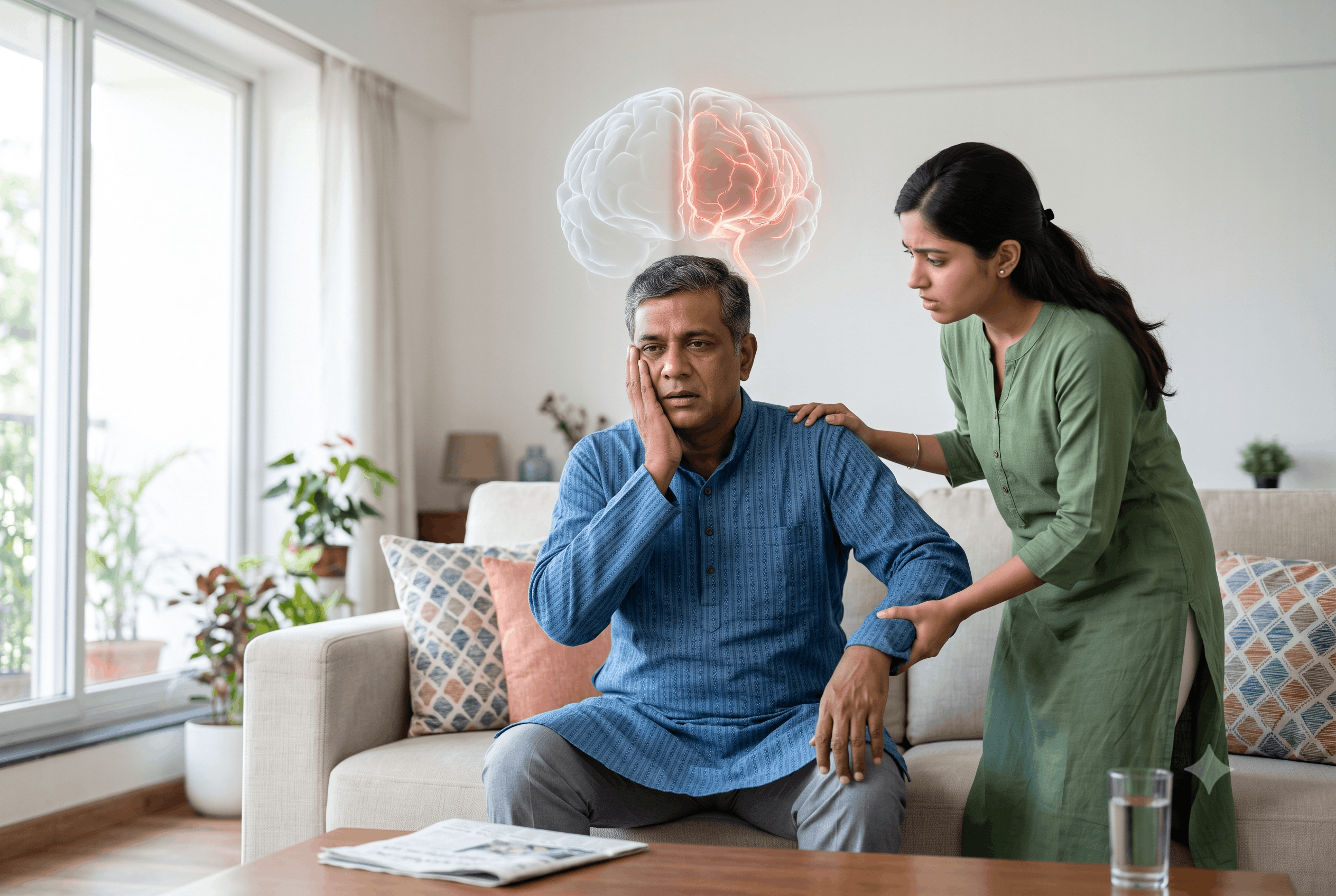
Stroke frequently presents as one of the top medical emergencies in India, and people of all age groups suffer stroke. Many patients present with sudden weakness, slurred speech, dizziness or other severe headache, often unsure what is happening. And in that crucial moment, seconds truly count. The brain loses millions of neurons within minutes, which is why doctors say, “Time is brain.”
CT Angiography (CTA) is important for rapid and accurate diagnosis of stroke. CTA provides a clear and detailed picture of the blood vessels in the brain and will help doctors determine if there are any blockages, bleeds, clots or abnormalities that may threaten the life of the patient. If you or your loved one ever experiences a suspected stroke, CTA can be the lifesaving investigation that guides immediate and effective treatment.
Let’s understand this in a simple, human way.
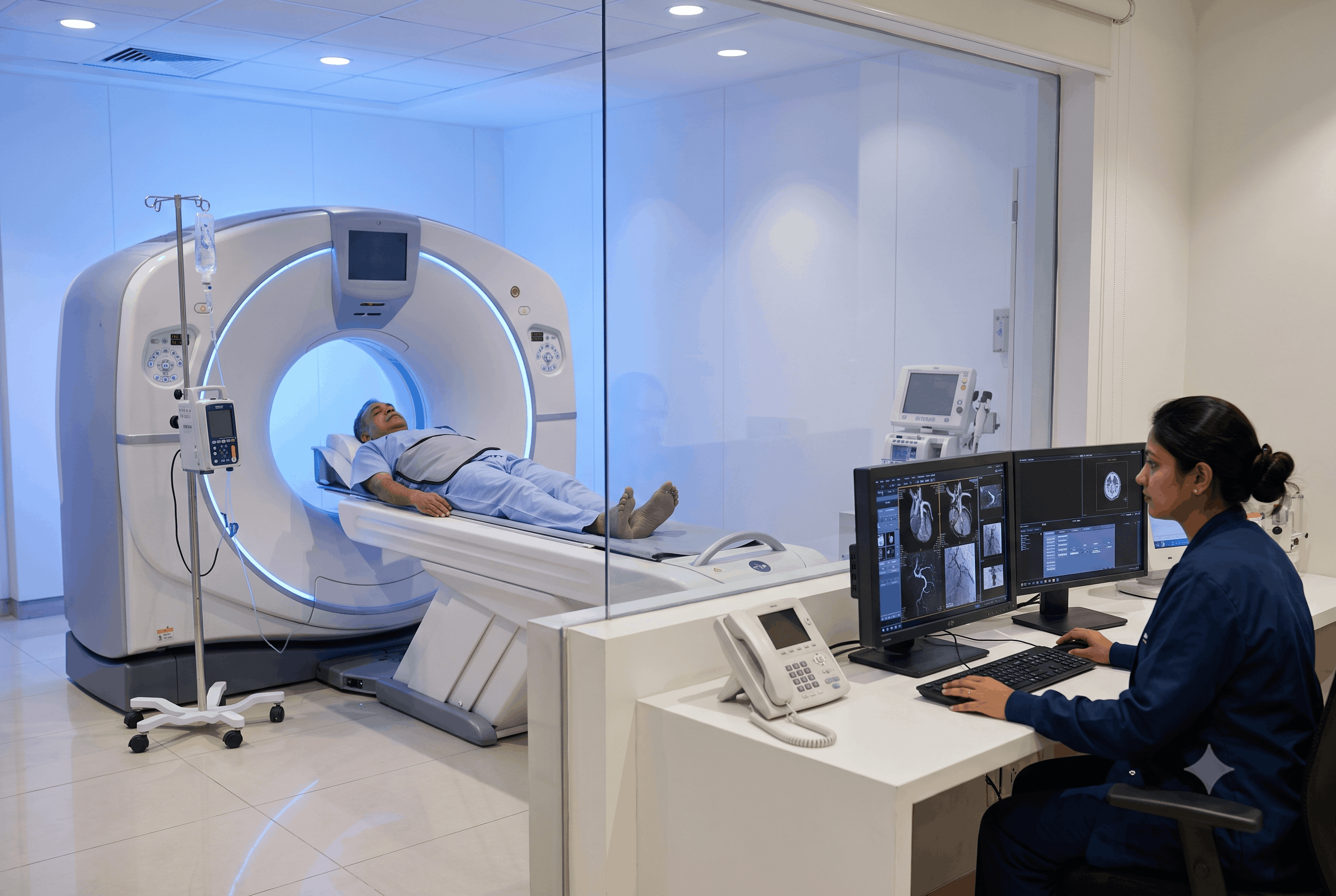
CTA is a sophisticated imaging test that employs CT scanning technology along with a special contrast dye to image the blood vessels in the brain. The contrast enhances the visibility to a very great degree, hence permitting doctors to assess blood flow and anomalies with a high degree of accuracy.
It is fast, non-invasive, and can be completed within a few minutes, which is most important in a medical emergency such as a stroke.
The process usually consists of injecting a contrast dye into a vein, performing a high-speed CT scan, and producing detailed 3D images of the arteries and veins. CTA helps radiologists see blockages, narrowing, ruptures, or malformations with remarkable clarity.
There are two major types of strokes:
Ischemic Stroke
Caused by a blood clot that blocks a brain artery; nearly 85% of all stroke cases are due to this.
Hemorrhagic Stroke
Caused by bleeding in the brain resulting from a ruptured blood vessel.
Both require completely different treatments. CTA helps doctors identify the type of stroke, exactly where the problem is, the severity and if immediate procedures such as clot removal or surgical intervention are required. Without CTA, clinical decisions can be delayed and reduce the possibility of recovery.
Think of a typical scenario: a patient suddenly develops weakness of one side of the body. The family rushes them to the hospital. There, doctors have to act in a very prompt manner.
CTA helps determine:
Blood Clot Detection
CTA shows exactly where the clot is that’s blocking blood flow to the brain.
Checking for Narrowing of Blood Vessels
Sometimes arteries narrow due to build-up of cholesterol. CTA reveals this very clearly.
Aneurysm Identification
Balloon-like swellings in arteries can rupture. CTA detects them early.
Identifying AVMs
Abnormal tangles of blood vessels can cause stroke. CTA identifies them.
Assessing Collateral Circulation
When a major vessel is blocked, sometimes the brain uses alternate pathways. CTA helps evaluate if these rescue vessels are working.
In other words, CTA provides physicians with a roadmap of the brain’s blood supply.
There is something called the Golden Hour, the first 60 to 90 minutes following the start of a stroke. Receiving treatment within that window can reverse a stroke, prevent permanent disability, save brain function and reduce the risk of death.
Because CTA can be completed in this golden window, it is sufficiently fast for doctors to start treatment straightaway.
CTA doesn’t just diagnose stroke, but it also evaluates the flow of blood within each part of the brain. This is especially useful for people who experience frequent headaches, dizziness, neurological weakness, or unexplained fainting episodes.
CTA can detect limited blood supply, vascular blockages, malformations, aneurysms, and areas that need close follow-up after a stroke or surgery.
CTA, being an advanced technology, requires highly developed scanners, radiologists with experience, and adequate safety measures. That is where Aarna Diagnostic Centre comes into prominence, with its commitments to accurate diagnosis, patient comfort, and ethics.
Advanced CT Technology
High-resolution, multi-slice CT systems quickly capture more detailed images with accuracy.
Low Radiation Techniques
Modern technologies minimize radiation exposure.
Experienced Radiologists
The CTA findings are interpreted with precision by the radiology team.
Fast and Reliable Reporting
Reports are quickly provided to support urgent treatment decisions.
A Patient-Centric Environment
Patients are treated with courtesy, understanding, and clear explanation.
Commitment to Preventive Healthcare
The centre promotes early screening for vascular disorders and long-term health awareness.
CTA is indicated for patients with:
A CTA can provide clarity if you have ongoing neurological symptoms.
Most patients find CTA to be safe, and the contrast dye is generally well-tolerated. If the patient has an allergy or prior kidney issues, a thorough evaluation will be done beforehand. The scan itself is quick and non-invasive and is useful for emergency and routine evaluations.
Stroke is an urgent and unpredictable medical condition. Timely diagnosis by CT Angiography means that doctors can act quickly to minimize injury and preserve critical brain function. The CTA below allows for exquisite detail highlighting the flow of blood in the brain that support locating clots, ruptures, narrowing, and other vascular abnormalities with unrivaled accuracy.
If you or a loved one exhibits even minor stroke symptoms, do not wait even a minute longer. Early CTA can mean the difference between recovery and disability. The Aarna Diagnostic Centre pairs innovative imaging with specialized radiologists ensuring precision in diagnosis explanation of clear treatment, and caring regard for each patient. Clarity is essential regarding the brain, which is exactly what we deliver with CTA.
Convenient Tests right at your Doorstep!
86, Kargi – Patel Nagar Bypass, near Palm City, Adarsh Vihar, Brahmanwala, Dehradun, Uttarakhand 248001
1, Maharani Bagh Lane, Ballupur Chowk, Ashirwad Enclave, Ballupur, Dehradun, Uttarakhand 248001
1, Chakrata Rd, near Rohan Motors, Selakui, Central Hope Town, Uttarakhand 248011
F-7, Haridwar Road Nehru Colony Dehradun, Uttarakhand 248001 India
Leave a Comment