

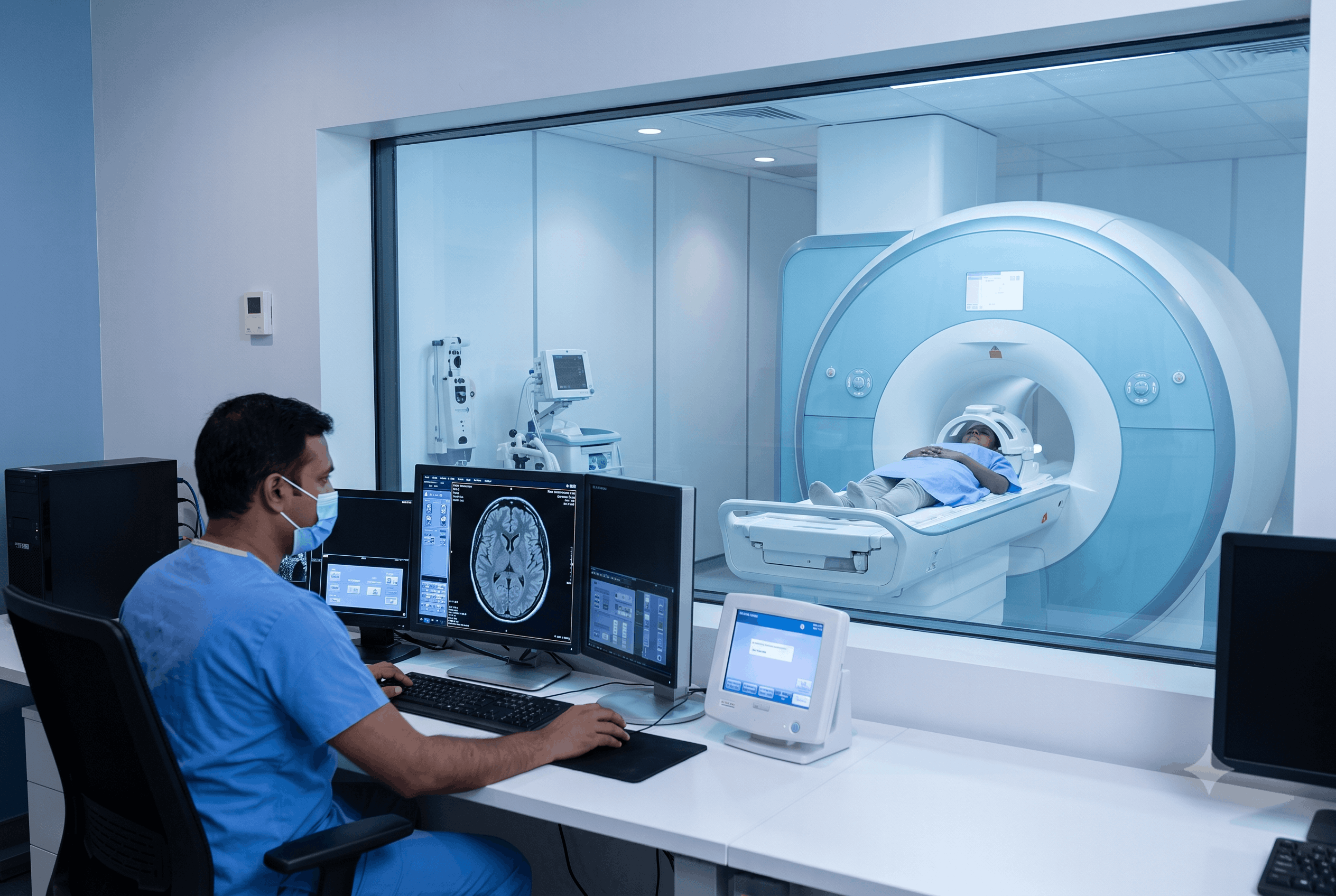
The brain controls the functions of the human body such as movement and memory, speech, sight, balance and emotional health. The brain communicates with the other systems of the body through the nervous system. Various parts of the body talk to each other using chemical signals (hormones) that are released from glands and electrical signals (neurons). This interaction causes the body to provide warning signs when something is wrong with the brain. While many neurological symptoms have benign origins, some could indicate serious conditions that require immediate medical attention.
A brain MRI scan is considered one of the best ways to diagnose the problem with the brain. An MRI produces high resolution (very clear pictures) images of structures within the brain (e.g., tissues, nerves, blood). No ionising radiation is used to take the pictures, which means doctors can find conditions that may not be detectable using radiography or CT scans.
Recognising which symptoms should never be ignored allows people to seek medical advice when necessary and can avoid unnecessary complications resulting from late diagnosis.
Headaches are among the most common complaints people see from medical professionals, and there are many different reasons why people suffer from headaches, stress, dehydration, migraines, lack of sleep, among others. However, people should always seek the assistance of a medical professional for evaluation if their headaches are severe, chronic, develop progressively worse, or are different from their normal headache patterns.
If someone is experiencing severe head pain with any of the following symptoms—nausea, blurred vision, paralysis, seizures, or personality changes—it can be advisable to perform a brain MRI. The above symptoms may also indicate serious problems such as brain tumours, bleeding, increased pressure within the skull, or other structural lesions.
Many headaches are caused by other than serious illness, but a brain scan can confirm any underlying neurologic problems that may be present with the above-listed “red flags.”
The sudden onset of weakness or numbness or tingling in one side of the face, arm, or leg should not be taken lightly. These may be indicative of a stroke or some other medical emergency. Brain MRI scans are very good at determining if there is a significant injury due to reduced blood flow to the brain and will also tell the doctor the location and size of the damage. Early detection is critical as the effective treatment of a stroke or other neurological condition occurs within the first several hours of symptoms appearing.
Immediate medical attention is needed for sudden loss of movement or sensation.
Difficulties with speaking (problems articulating words, difficulty finding words, unclear speech) or understanding what is being said may also be signs of an underlying brain injury.
The symptoms listed above are frequently related to a stroke, but they also have the chance of being a result of other brain-related conditions such as a brain tumour, infection, multiple sclerosis, traumatic brain injury (TBI) or degenerative neurological disease.
A Brain MRI will give your doctor the opportunity to identify any abnormalities in the specific regions of the brain that are responsible for producing and processing language and communications. By being able to assess the specific regions of the brain, it will allow your doctor to clearly determine what has caused the symptoms you have.
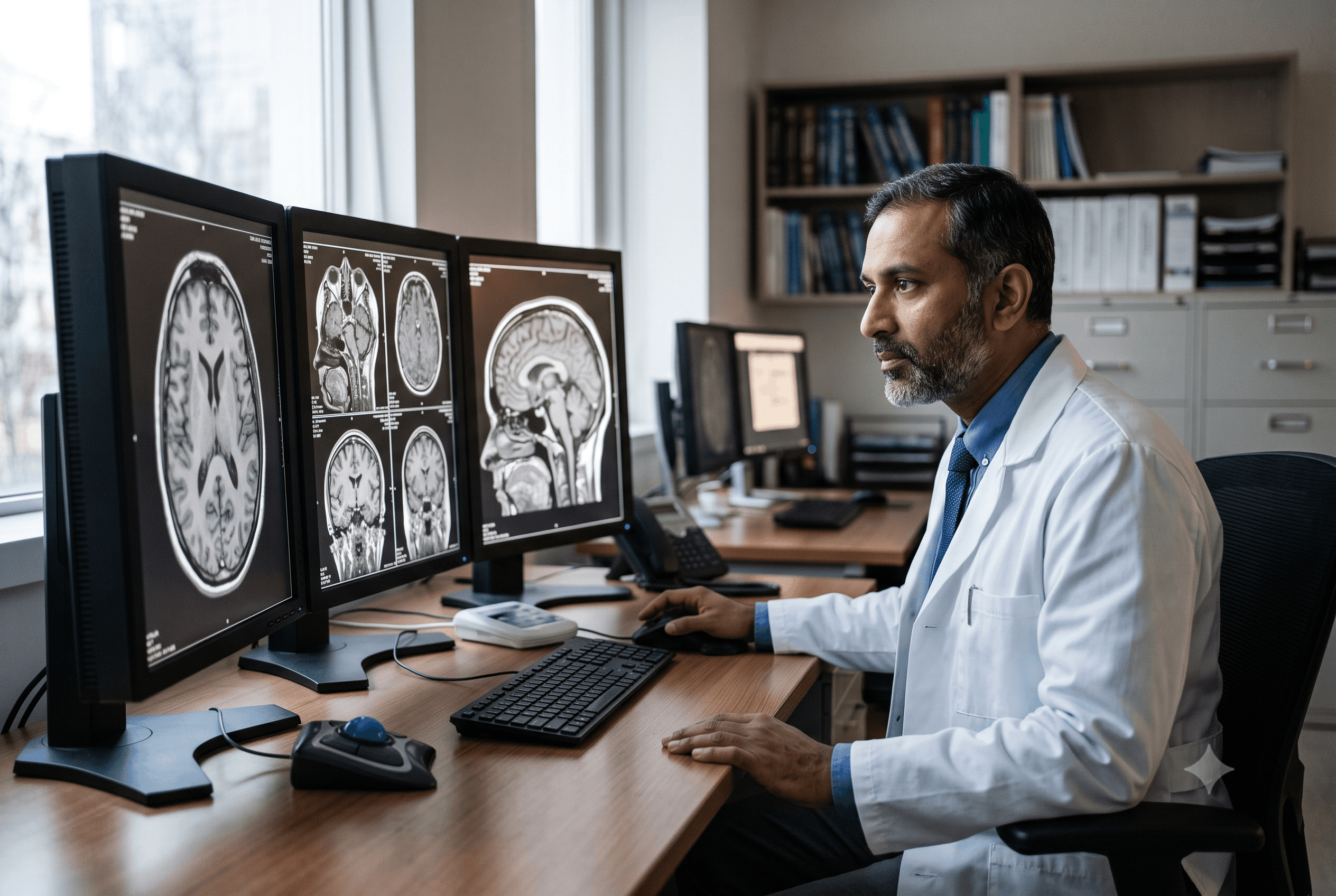
Having a seizure for the first time is always a serious medical condition that requires evaluation by a physician.
Seizures can occur as the result of many different reasons, such as: epilepsy, brain tumours, past head injury, infection, a congenital (or developmental) abnormality, or a metabolic disorder; and there are also cases in which seizures take place without an identifiable cause even after extensive imaging studies are done.
The Brain MRI is considered to be among the best diagnostic tests for identifying brain structure abnormalities that could potentially produce a seizure because they provide very detailed images of the brain tissue and can assist neurologists in determining the best treatment approach.
Having an occasional dizzy feeling is a perfectly normal occurrence that could be due to an issue within the inner ear, dehydration or temporary illness; however, chronic feelings of dizziness with frequent falls, unstable gait (or poor coordination) or having difficulty maintaining your balance could potentially indicate you have a neurological illness or disease that affects the brain and/or brainstem.
A Brain MRI can identify strokes, multiple sclerosis, tumours or other neurological disorders that involve regions of the brain or brainstem that control balance and coordination.
If dizziness is accompanied by weakness, double vision, difficulty speaking, or severe headache, immediate medical attention is necessary.
If you’re having difficulty with your eyesight, it’s possible that your eyesight problems are caused by something occurring in your brain rather than your eyesight being affected directly.
The conditions you are having difficulty seeing are often referred to as visual pathways, and they are the result of problems with your visual pathways in your brain.
A brain MRI can help evaluate the structures of your brain so that doctors can understand what is causing those problems if routine eye exams show no problem with your eyes.
There will be times when you forget things, especially as you age and as a part of normal aging processes (such as stress or fatigue). However, large memory loss, confusion, a change in your personality, and having trouble doing familiar tasks arise are not to be ignored.
There are many possible conditions that can be related to these types of symptoms and examples include Alzheimer’s disease, vascular dementia, brain tumours, infections, hydrocephalus and other types of neurological disorders.
The brain MRI can help give a lot of detail about how your brain looks and also about what’s changed in your brain related to dementia and other conditions that affect memory and cognitive function.
In some cases, neurological conditions that are affecting certain portions of your brain can also create changes in your behaviour, mood, judgement and personality.
Family members are often the ones to notice these types of changes. Examples of these types of changes include increased irritability, confusion, loss of inhibition, depression, or other types of unusual behaviours.
Brain MRI helps identify structural abnormalities, tumours, inflammation, or degenerative diseases that could explain these symptoms.
Following a brain injury such as a head injury, if you experience ongoing headache, vomiting, confusion, or recurrent vomiting and/or other unusual symptoms (such as confusion), seek medical evaluation without delay. Examples of unusual or ongoing symptoms include: developing seizures, experiencing memory problems (i.e. not recalling recent events), experiencing continuing dizziness and balance issues, etc. You may receive CT brain scans in the emergency department; however, if the clinical circumstances warrant an MRI of your brain will be done after your initial management in order to evaluate for subtle brain injury, injured nerve fibres in your head and small areas of bleeding that may not be seen on CT or other imaging studies at the time of your injury.
Brain MRI is also essential to assess the long-term effects of traumatic brain injury in patients.

MS is an incurable, chronic autoimmune disease that occurs when the immune system attacks the protective layers surrounding the fibres of nerves in the brain and spinal cord.
Some of the early symptoms of MS include numbness, weakness, visual disturbances, stiffness of the muscles, fatigue, and difficulty maintaining balance.
Brain MRI is crucial to diagnosing MS, as it will allow the physician to find the characteristic inflammation and damage to the fibres of nerves found in the central nervous system (brain and spinal cord) affected by MS. Monitoring of MS disease progression and the response of patients with MS to treatment is done with brain MRI over time.
Brain MRIs are not recommended by Doctors for every headache or dizziness they encounter. A number of factors ultimately determine whether an MRI will be ordered by your Doctor. Things considered include: the specific symptoms you are having, any previous medical history that may relate to your current issue, the results of a neurological exam, your age, and results from other tests.
A Brain MRI may be recommended when your symptoms tell the Doctor to look more closely for an obvious structural or neurological abnormality. A Brain MRI can also be done to follow a known neurological or structural problem in a patient, as well as to monitor for improvement after treatment.
An MR of your Brain is considered a safe way to obtain an image of your Brain, as the method of MRI uses no ionizing radiation. An MRI uses large magnets and radio waves to produce extremely detailed images.
If you have any type of implanted medical device (ex: pacemaker, cochlear implant, aneurysm clip/s, or any metal), you need to alert your Doctor prior to getting an MRI. Most new medical devices now used are considered MRI safe but they should be cleared prior to your examination.
Some MRI exams require the use of a contrast agent (a fluid used to help improve the quality of the MRI image) and your Doctor will determine if this agent is necessary for the condition to be evaluated.
Diagnostic testing can help identify and monitor progressive neurological disorders and those that require prompt intervention. Neurological symptoms are not always easy to assess; however, there is a wide range of symptoms that may require assessment by a physician. These include persistent headaches, sudden weakness, seizure activity, difficulty speaking, visual disturbances, and unexplained confusion.
A brain MRI allows the physician to identify any abnormalities at an earlier stage. The sooner a condition is diagnosed, the more effective treatment can be administered, leading to an improvement in the patient’s symptoms and a more favorable outcome.
The brain is one of the most complicated organs in the body. Therefore, a seemingly minor neurological symptom can be a serious indication of a larger health issue. While not every patient with a neurological symptom requires a brain MRI, all patients with persistent or atypical neurological symptoms should undergo a thorough medical evaluation by a qualified healthcare provider.
Brain MRI continues to be among the most accurate and informative methods for imaging the nervous system. This will provide physicians with quality information about the patient’s condition, which will help them make informed and timely treatment decisions.
By being aware of the warning signs of neurological issues, individuals will be able to identify themselves as needing appropriate medical assistance and thus avoid undue delays in receiving this care. In Dehradun, local access to advanced MRI facilities, including Aarna Diagnostic Centre, ensures that when recommended by the patient’s primary care physician, the appropriate imaging of the patient’s brain will be performed in a timely manner.
Convenient Tests right at your Doorstep!


86, Kargi – Patel Nagar Bypass, near Palm City, Adarsh Vihar, Brahmanwala, Dehradun, Uttarakhand 248001
1, Maharani Bagh Lane, Ballupur Chowk, Ashirwad Enclave, Ballupur, Dehradun, Uttarakhand 248001
1, Chakrata Rd, near Rohan Motors, Selakui, Central Hope Town, Uttarakhand 248011
F-7, Haridwar Road Nehru Colony Dehradun, Uttarakhand 248001 India
Leave a Comment