

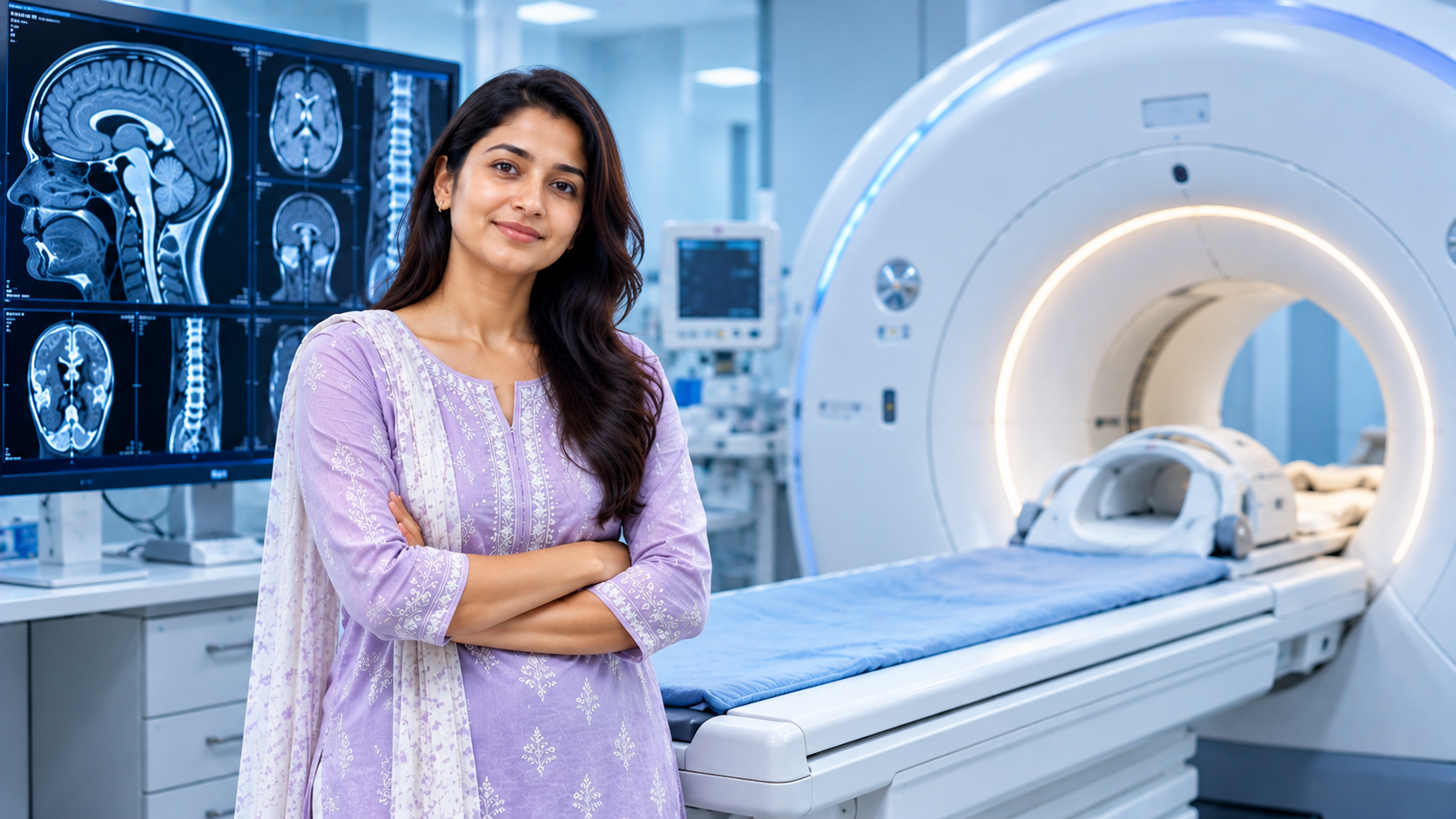
CT and MRI scans among many non-surgical techniques of imaging diagnostics find their use among patients. Though both methods allow doctors to observe inner body structures, they work on different principles.
Getting to know about CT Scan vs MRI might help patients understand why their doctor chose one test over the other based on the area under examination, the disease associated, whether the condition is urgent, medical history of the patient and the information required.
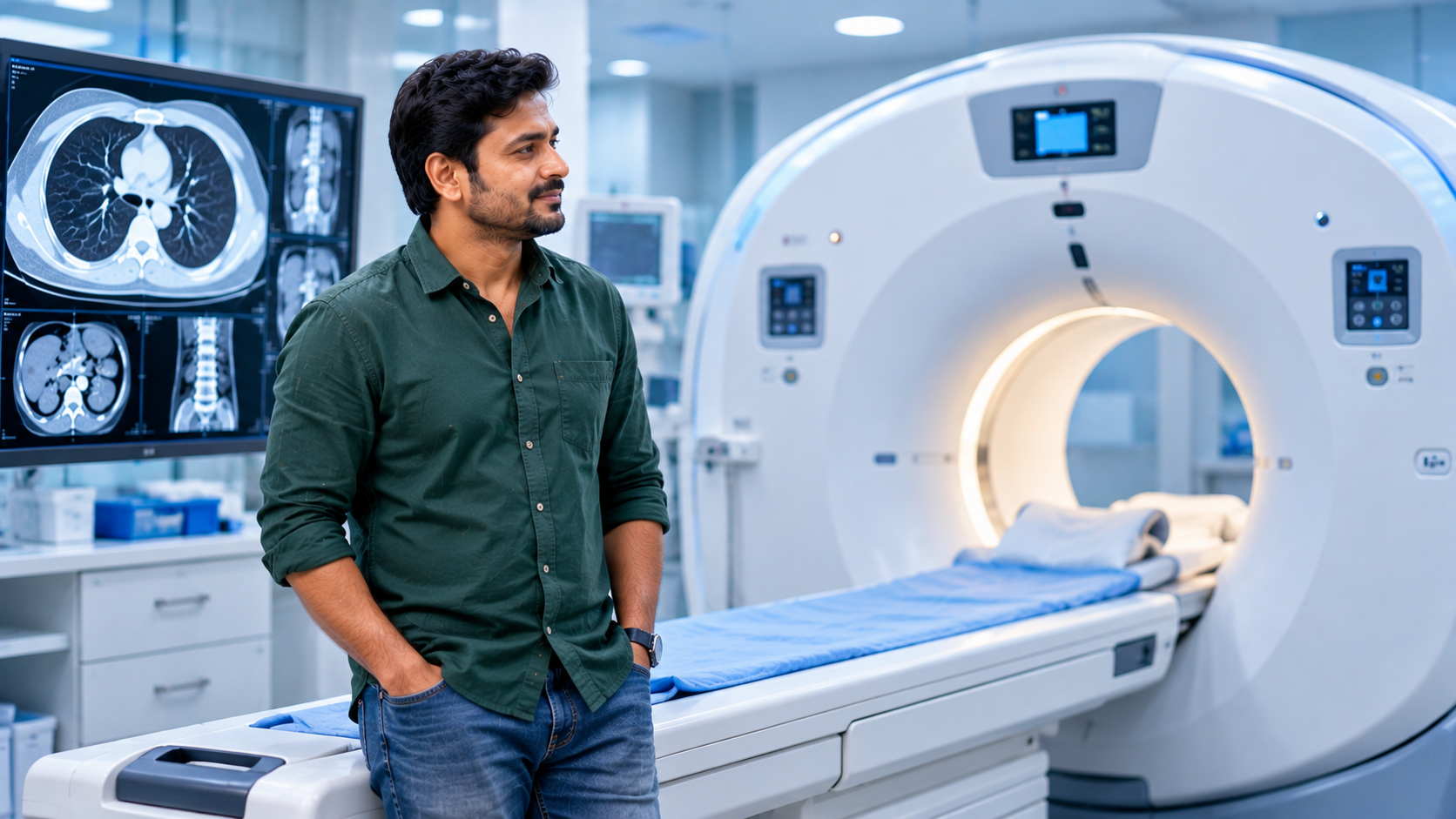
In a CT (Computed Tomography) scan, X-rays and computer processing are combined to produce detailed images of the body’s cross-sections. The process is also fast and provides information about bones and organs, blood vessels and soft tissue.
Because CT scans can be done quickly, they are great to use in case of emergency, including cases of trauma, suspicion of blood bleeding or acute neurological conditions.
Whether or not a contrasting medium is used for CT imaging depends on the type of medical question to be answered.
Magnetic Resonance Imaging (MRI) is a technique that utilizes a strong magnet and radio signals instead of X-rays to create the detailed pictures.
MRI is effective for studying different kinds of soft tissues, such as the brain, spinal cord, nerves, muscles, ligaments, joints and certain internal organs.
Normally, MRI takes longer than CT scans, and it is necessary for the patient to stay still in the apparatus.
In addition to showing the brain, both tests have different functions.
CT scan is often employed when there is a need for quick imaging of the head following injury, or if bleeding is suspected within the skull. It is also used to diagnose skull fractures, among other things.
MRI produces improved detail of soft tissues and may be appropriate for diagnosing a number of diseases and conditions associated with the brain and central nervous system, including the diagnosis of tumours and inflamed tissues. The choice of scan depends on the clinical context.
CT excels in its ability to obtain detailed images of bone and is especially beneficial in evaluation of complicated fractures and some bone disorders.
Meanwhile, MRI is able to obtain detailed imagery of tissues around a joint, including ligaments, tendons, cartilage, muscles, and bone marrow. For example, in case of suspected ligament injury that is non-visualized with X-ray, MRI can be used for precise imaging in patient.
MRI examination is highly relevant in diagnosing problems associated with the spine, as it can illustrate well intervertebral spaces, nerves and the spinal cord, as well as surrounding soft tissues.
It can also help in diagnosing the condition like hernias and nerve compression.
CT scan can be helpful especially in the diagnosis of spinal fractures and for obtaining detailed pictures of bone structures. In some cases these two methods can provide additional information for diagnostic purposes.
CT scan is usually more advantageous in case of elaborate assessment of the lungs. Chest CT scan assists in detecting the presence of lung nodules, infection, emphysema, bronchiectasis and other abnormalities.
MRI scan is not typically used for routine evaluation of the lungs as such a condition is not very proper for conventional MRI. Nevertheless, MRI scan has more relevant peculiarity regarding the chest area, especially when dealing with specific investigations of cardiovascular conditions and soft tissues.
There is no single answer for this question. Various answers are available.
CT is frequently employed in the diagnosis of acute pain in the abdomen, kidney stones, bowel disorders, abdominal injuries, blood loss, and various types of infections.
MRI allows us to conduct a thorough examination of the states of the individual viscera, such as the liver, pancreas, and biliary system. There are specialized techniques called MRCP that help to obtain images of the bile and pancreatic ducts in detail.
Certain abdominal conditions are now examined by verified ultrasound.
The principal divergence of CT compared to MRI is the degree of radiation exposure.
CT employs ionising radiation, and this differs based on the nature and site of the scan, implying that it must only be done when there is a medical reason for it to be performed.
Nevertheless, MRI does not use ionising radiation, but it doesn’t imply that everyone can undergo an MRI scan. The powerful magnetic field dictates a number of safety protocols to be followed.
Thus, patients must inform the imaging specialists about any of their implants, metal fragments, surgical history and other related matters before an MRI is done to them. Some devices are MRI-compatible or MRI-conditional, while others may affect whether or how the examination can be performed.
Although CT and MRI may utilize contrast agents, the specific type typically used in each technique is dissimilar.
While CT uses iodine-based contrast, MRI employs gadolinium-based contrast in most instances. Not every examination requires contrast.
Factors affecting whether contrast will be administered include kidney function, history of any previous adverse events, pregnancy and other physiological issues.
The operation of CT scans characteristically occurs in much shorter intervals compared to other scanning technologies. Some CT scans can last for only a couple of minutes, rendering this technique important when rapid assessment of the problem is required.
MRI procedures usually take more time compared to CT scans, although the duration of the operation depends on the area of the body that is scanned, as well as other factors. Furthermore, the patients are required to remain still enough to provide quality image resolution.
Aarna Diagnostic Centre in Dehradun is ready to assist in providing CT and MRI scans whenever these diagnostic procedures are requested by a doctor on the patient.
The choice of CT over MRI is not simply a matter of deciding which method is better. CT is best for doing quick scans of the body, observations of things like the lungs, bones, trauma cases, stones in the kidney, and bleeding. Meanwhile, MRI is excellent in providing information about various soft tissues in the body such as the brain, spinal cord, nerves etc.
A healthcare professional can determine which examination is most appropriate for the condition being investigated.
The answer to this question is that each of the two scans gives different kinds of information, so one of them cannot be better than the other in every single case.
The answer is that CT is usually faster than MRI, so CT is used whenever it is necessary to make immediate imaging.
The answer is that there is no risk, because MRI uses magnetic field and radio waves instead of X-rays.
Both CT and MRI are good for brain imaging needs. CT is often used for emergency reasons to check for the presence of trauma or bleeding in the head, while MRI gives more detailed images of soft tissues for some neurological conditions.
In general, the choice of whether to do CT or MRI is determined on the basis of the patient’s symptoms, medical history and healthcare needs.
Convenient Tests right at your Doorstep!


86, Kargi – Patel Nagar Bypass, near Palm City, Adarsh Vihar, Brahmanwala, Dehradun, Uttarakhand 248001
1, Maharani Bagh Lane, Ballupur Chowk, Ashirwad Enclave, Ballupur, Dehradun, Uttarakhand 248001
1, Chakrata Rd, near Rohan Motors, Selakui, Central Hope Town, Uttarakhand 248011
F-7, Haridwar Road Nehru Colony Dehradun, Uttarakhand 248001 India
Leave a Comment