


The thyroid is a small, butterfly-shaped gland found in the front of the neck that produces hormones that regulate many of the body’s functions. It regulates the body’s metabolism, energy level, temperature, heart rate, digestion, and growth. If the level of thyroid hormone diverges significantly from normal, a wide variety of symptoms can be seen in various organs and systems.
The process of testing thyroid levels is known as the thyroid profile procedure. If you are planning to undergo thyroid testing in Dehradun, knowing what the thyroid profile procedure is used for and when it is needed can be helpful in understanding and interpreting its objective.
A thyroid profile typically includes several hormones that are necessary for thyroid regulation. The number of tests included in the profile will depend on the lab and the reasons for doing the test.
The most commonly assessed markers include:
TSH (Thyroid-Stimulating Hormone): TSH is produced by the pituitary gland in the brain and communicates with the thyroid to initiate the production of thyroid hormones. This is usually one of the very first tests that is done.
T4 (Thyroxine): T4 is the main hormone produced by the thyroid gland and can be either total T4 or free T4. Free T4 is the portion of the hormone that is available for use by the body.
T3 (Triiodothyronine): T3 is another important thyroid hormone that is more potent in action. It can be measured as either total T3 or free T3 and can be very useful in cases of severe hyperthyroidism.
Depending on the case, doctors may sometimes order other tests for testing thyroid antibodies for autoimmune problems such as Hashimoto’s disease or Graves’ disease.
A wide range of symptoms can arise due to thyroid disorders. Consequently, individuals tend to receive a recommendation for testing when they are diagnosed with persistent issues that cannot be explained.
The symptoms of hypothyroidism (underactive thyroid) may include fatigue, weight gain without any visible cause, cold sensation, skin dryness, constipation, difficulty concentrating, mood swings as well as menstrual disorders.
Hyperthyroidism (overactive thyroid) may manifest itself through loss of weight without apparent reason, increased sweating, feeling warmth, rapid or irregular heartbeats, anxiety, tremors, sleep problems, and frequent bowel movements.
Therefore, a person suffering from the aforementioned problems should not necessarily think that he or she has thyroid disorders. Blood tests are conducted to find out if the thyroid hormone levels are abnormal.
Both TSH and thyroid hormone levels must be considered together.
Unless musculoskeletal muscle levels are particularly low, the combination of high TSH and low free T4 is suggestive of primary hypothyroidism, while a low TSH with high T4 and/or T3 suggests hyperthyroidism.
Sometimes the TSH may not be normal while the thyroid hormone levels lie within the reference range for the laboratory.
This may occur in what is referred to as subclinical hypothyroidism or subclinical hyperthyroidism.
When interpreting thyroid results, one should not just consider the absolute value of the given result, as the reference ranges vary for different laboratories as well as for different groups of people based on age, pregnancy status, and medications used.

Thyroid hormones play an important role in the health of the mother and the development of the baby. During pregnancy, there are also some normal changes in thyroid physiology that may affect how test results are evaluated.
Some women may need to have testing done before or during pregnancy due to already having thyroid problems or being at risk. How often testing needs to be done can be determined by the physician providing treatment.
Thyroid function testing usually does not require fasting beforehand but fasting may be required when blood tests such as cholesterol and blood glucose tests are being performed simultaneously.
Some of the medications and supplements affect the results of the thyroid tests. For example, some laboratory tests can be altered due to the high dosage of biotin being taken. Always notify your physician or laboratory about any medications and supplements before discontinuing any of them.
People who have already been diagnosed with either hypothyroidism or hyperthyroidism often undergo further blood testing to assess their condition and response to treatment. Checking is often recommended for people who have a history of thyroid disease, thyroid surgery, autoimmune disorders or those with family history of thyroid disease, depending on the person’s context.
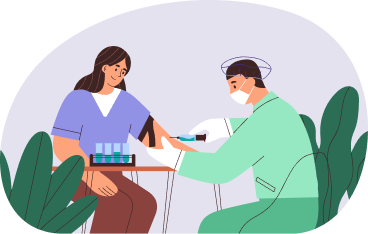
In Dehradun, a thyroid test can be conducted by analyzing a simple blood sample. Aarna Diagnostic Centre has facilities for thyroid profile tests, whose results can be analyzed in conjunction with the patient’s symptoms and medical history.
It is imperative to undergo a thyroid profile test in order to learn more about the thyroid function, which comprises hormone readings, such as TSH, T3, and T4, and helps detect an abnormality concerning the thyroid’s low or high activity. The profile test is considered recommended when symptoms persist, when monitoring the condition of the thyroid is required, or when necessary due to the unique situation of the patient, for example, as a result of pregnancy or particular health conditions.
A typical thyroid exam consists of TSH, T3, and T4, although some tests may include the measurement of free T3 and free T4. An individual lab can have a different set of tests for a thyroid profile.
TSH is commonly utilized as the key indicator in the thyroid blood test, but one may need results of additional tests such as free T4 or free T3 to draw any conclusion.
Yes. While hypothyroidism will cause an individual to gain weight, in hyperthyroidism the result would be loss of weight. However, weight change may occur due to various other reasons and thyroid diseases may not be the only possible cause.
Generally, fasting is not implied if thyroid function is being examined only one test. Fasting might be required if there are other blood tests taken alongside.
There is no overall schedule for all the people. The frequency of examination depends on the type of sickness and prior results.
Convenient Tests right at your Doorstep!

86, Kargi – Patel Nagar Bypass, near Palm City, Adarsh Vihar, Brahmanwala, Dehradun, Uttarakhand 248001
1, Maharani Bagh Lane, Ballupur Chowk, Ashirwad Enclave, Ballupur, Dehradun, Uttarakhand 248001
1, Chakrata Rd, near Rohan Motors, Selakui, Central Hope Town, Uttarakhand 248011
F-7, Haridwar Road Nehru Colony Dehradun, Uttarakhand 248001 India
Leave a Comment