


Pregnancy is one of the most wonderful journeys of life, combining excitement, expectancy, and numerous questions. Every parent wishes to enjoy a sound pregnancy and a healthy baby, and regular prenatal care is very helpful in that. Among the things which prove to be helpful in pregnancy, ultrasound scans are among the most useful as they enable physicians to track how the baby develops as well as the way the mother’s health develops.
Pregnancy scans provide not only the opportunity to have the first look at the baby but also important medical information from which it is possible to learn about potential problems beforehand, follow the fetal development, and make a rough calculation of the due date. Understanding the tasks of different scans will make the expecting mothers more confident about this special period.
Ultrasound imaging consists of the use of sound waves that originate from high frequency sources and delivers pictures of the baby in the uterus. This type of imaging does not harm either the mother or the child when carried out by expert health specialists.
Because of the regular use of obstetric ultrasound, doctors are able to do the following:
This type of ultrasound provides answers to various questions at different time intervals.
Usually, the first ultrasound scan is carried out in the early weeks of pregnancy. It helps in confirming that the pregnancy exists, if the pregnancy is in the uterus, number of children, expected delivery date, etc. Besides that, it confirms the heartbeat of the child, giving a sense of relief in the first trimester. It is also quite useful in case someone suffers from bleeding or has pain in her abdomen.
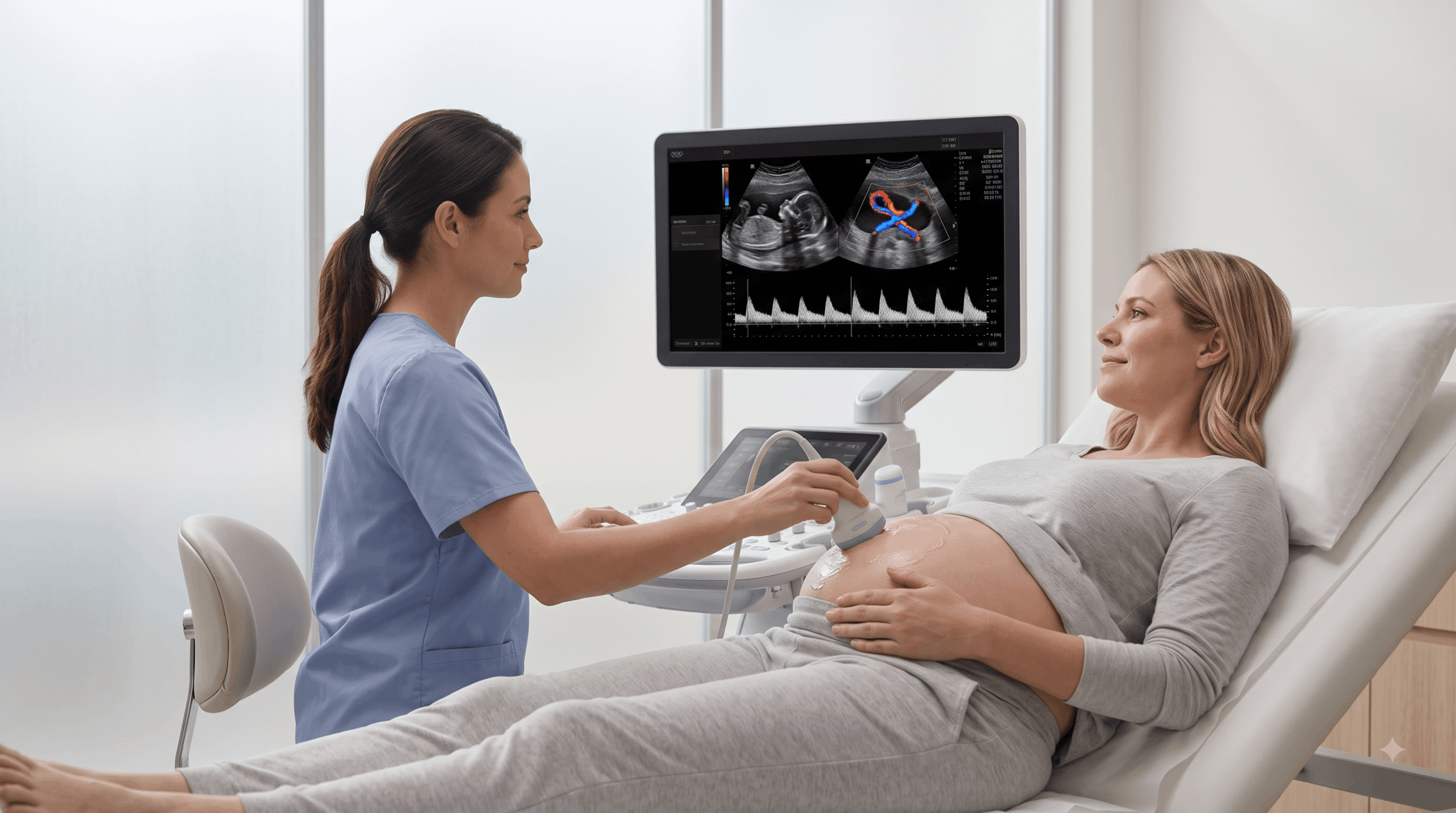
Typically, NT Scan is done between the 11th and the 14th week of pregnancy. In this procedure, the sonographer measures the collected liquid at the back of the fetal neck.
Increased values may point to the higher possibility of having chromosomal problems such as Down syndrome, Edwards syndrome, or Patau syndrome. However, it should be noted that the NT Scan is a screening test instead of a diagnostic test. It provides the possibility of having the above problems without confirming them.
This is the reason why doctors often suggest doing the NT Scan along with the Double Marker Blood Test in order to get better results of first-trimester screening.
This is a blood test rather than an ultrasound; however, it is quite similar to the NT Scan. The double marker test looks for pregnancy hormones and pregnancy proteins present in the mother’s blood.
When combined with the results of the NT Scan, maternal age, and gestational age, the results yield more reliable information regarding the baby’s risk for chromosomal abnormalities. In case the results indicate a high risk, further diagnostic tests may be prescribed.
The anomaly scan, also referred to as the Level 2 ultrasound, ranks among the most significant and thorough examinations conducted during pregnancy. Usually performed during the 18th to 22nd week of pregnancy, this procedure allows the sonographer to analyze carefully the various organs of the baby such as the brain, heart, spine, kidneys, stomach, physical characteristics, and limbs. The baby’s growth and movements, amniotic fluid, and placenta are all checked for thorough analysis.
The results of the scan make it possible for the doctor to detect the various physical malfunctioning in the baby if any such disorder exists. This scan does not guarantee that everything will be okay; however, it assures parents that the development is proceeding normally.
Throughout pregnancy, physicians may suggest one or numerous growth scans, mainly when fetal growth or health issues arise.
Growth scans help to determine:
The scans allow for the determination of healthy development of the baby during the last third of the pregnancy and assist the doctors in taking measures for further observation of the state of health of the baby.
In some situations, physicians recommend getting Doppler Ultrasound. Unlike regular ultrasound, Doppler studies help determine the blood circulation between mother, placenta, and the baby.
This procedure is useful in high-blood-pressure pregnancies, pregnancies with diabetes, underdeveloped fetuses, twin pregnancies, and placental issues. Proper blood circulation is necessary for the baby to get oxygen and nutrients.
With the help of Doppler Ultrasound, the doctors are able to assess the condition of the pregnancy and make decisions regarding the future actions based on the findings.
The Biophysical Profile is a test that uses an ultrasound and fetal heart rate to assess the health of the fetus. The Biophysical Profile is particularly important for assessing at-risk pregnancies and pregnancies that go past their due date.
This test measures disturbances in the womb which include fetal activity, fetal tone, breathing, amount of amniotic fluid surrounding the baby and the heartbeat. The doctor gets information which helps him determine whether the baby is healthy.
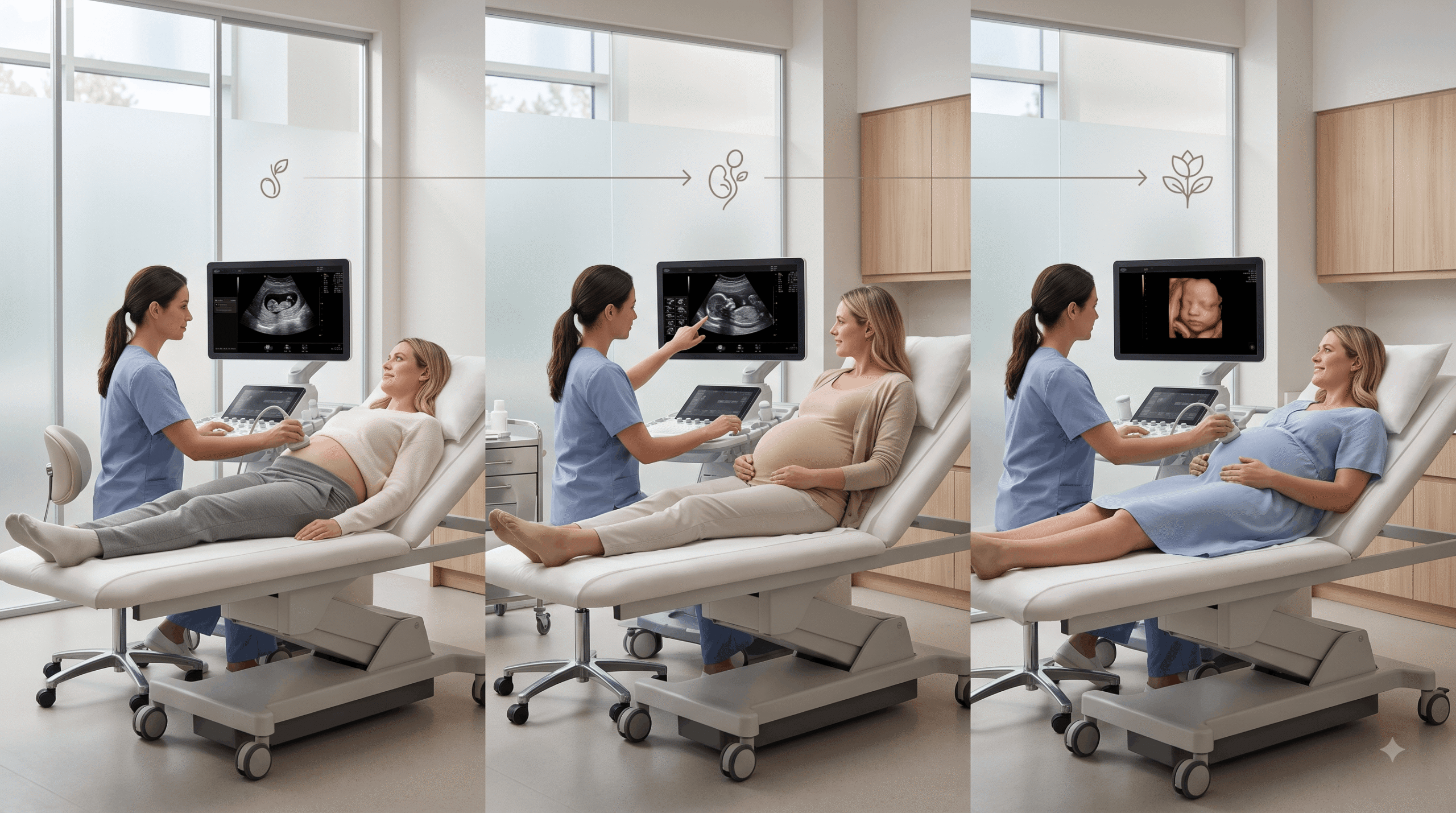
Mothers, who are expecting babies, are concerned whether repeated ultrasound scans are dangerous. Medical studies have proven that diagnostic ultrasound is safe when it’s done properly, by qualified personnel.
Ultrasound does not use radiation like X-ray or CT. It uses sound waves to provide pictures of the fetus.
Depending on a pregnancy stage and type of examination, preparation may be necessary before a scan. Early pregnancy scans usually require a full bladder for better imaging results, while later scans do not imply any necessary preparation.
Dressing comfortably and bringing along past medical notes or ultrasound records may contribute to the overall smoothness of the visit. If any particular directives were given by the doctor, it is always wise to adhere to them before the examination.
It is imperative to attend every pregnancy scan as useful information is extracted from the scans that cannot be obtained with the help of a conventional physical exam. Absence from scheduled scans may lead to delays in diagnosing some conditions that could have been treated if discovered earlier on. Responsible imaging is crucial even in case of a completely normal pregnancy. Nevertheless, regular imaging ensures good monitoring of fetal growth and its better prognosis.
Pregnancy is the procedure that you go through during this time. Regular ultrasound scans are good when it comes to checking the progress of your baby. This technology helps doctors in assessing both the condition of the mother and the baby. The doctors start using ultrasound during early pregnant stages, as well as in the third trimester, where it is used to assess the health and growth of the baby.
In case your doctor has recommended you to do a pregnancy ultrasound, it makes then sense to take your ultrasound at a reputable and technologically advanced diagnostic center. Aarna Diagnostic Center offers pregnancy ultrasound services that make the process easier and safer for those people who are pregnant.
Convenient Tests right at your Doorstep!


86, Kargi – Patel Nagar Bypass, near Palm City, Adarsh Vihar, Brahmanwala, Dehradun, Uttarakhand 248001
1, Maharani Bagh Lane, Ballupur Chowk, Ashirwad Enclave, Ballupur, Dehradun, Uttarakhand 248001
1, Chakrata Rd, near Rohan Motors, Selakui, Central Hope Town, Uttarakhand 248011
F-7, Haridwar Road Nehru Colony Dehradun, Uttarakhand 248001 India
Leave a Comment