

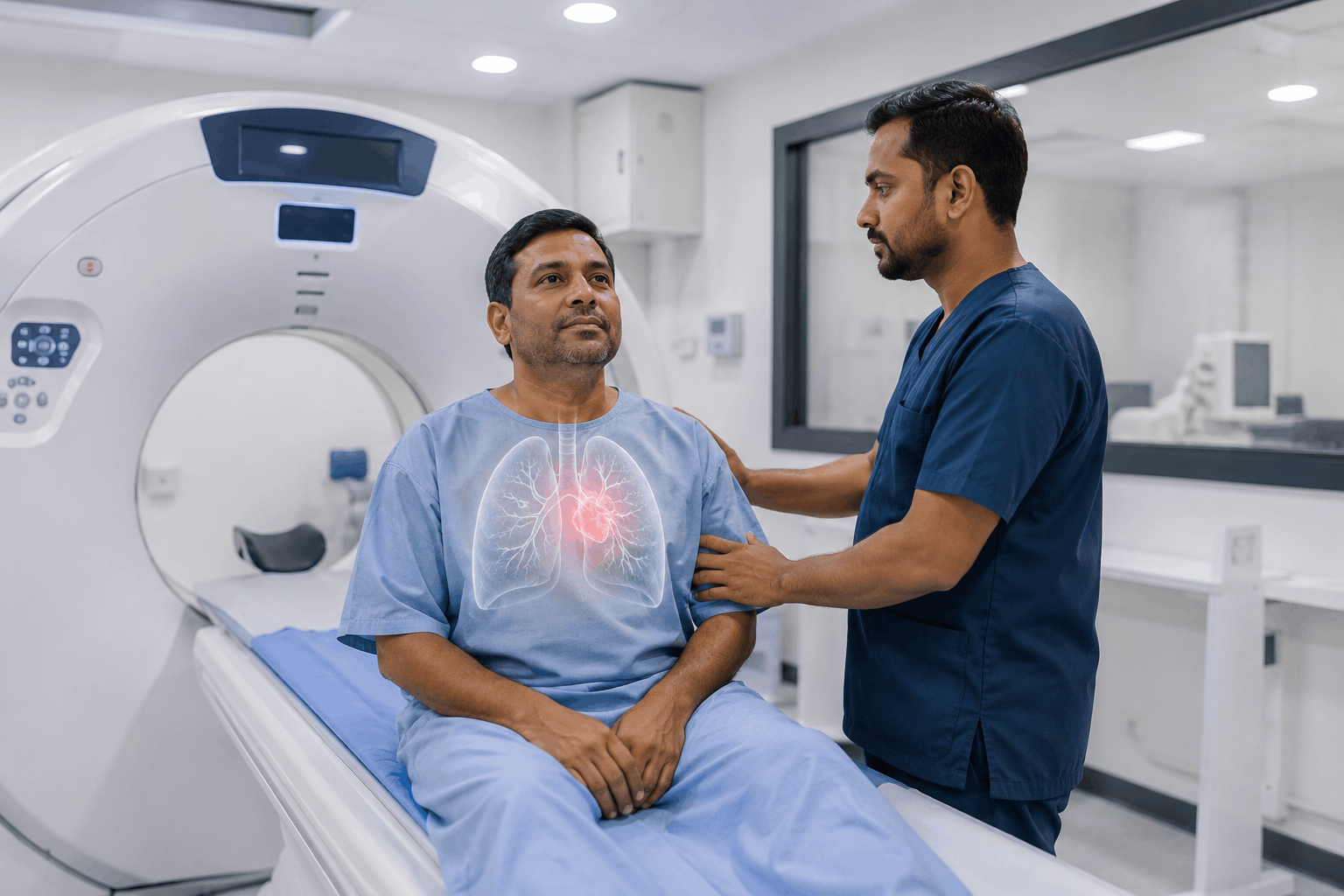
In India, the incidence of chronic respiratory diseases is on the rise. From cough lasting several months, breathlessness, wheezing, or chest tightness, people live with symptoms for months or years before knowing what is causing them. Yes, this situation is frustrating when the routine tests do not provide a straight answer, and at times when an X-ray is normal; the patient still does not have free breathing.
This is precisely the role of HRCT (High-Resolution Computed Tomography). Because it is often the most reliable, when it comes to identifying chronic lung disease with clarity and safety, it is used by doctors and the medical field. HRCT provides the clearest, high-definition representation of the smallest lung structures, leading to the early diagnosis of diseases with clarity.
There is a better way to understand this and it is simpler and more human.
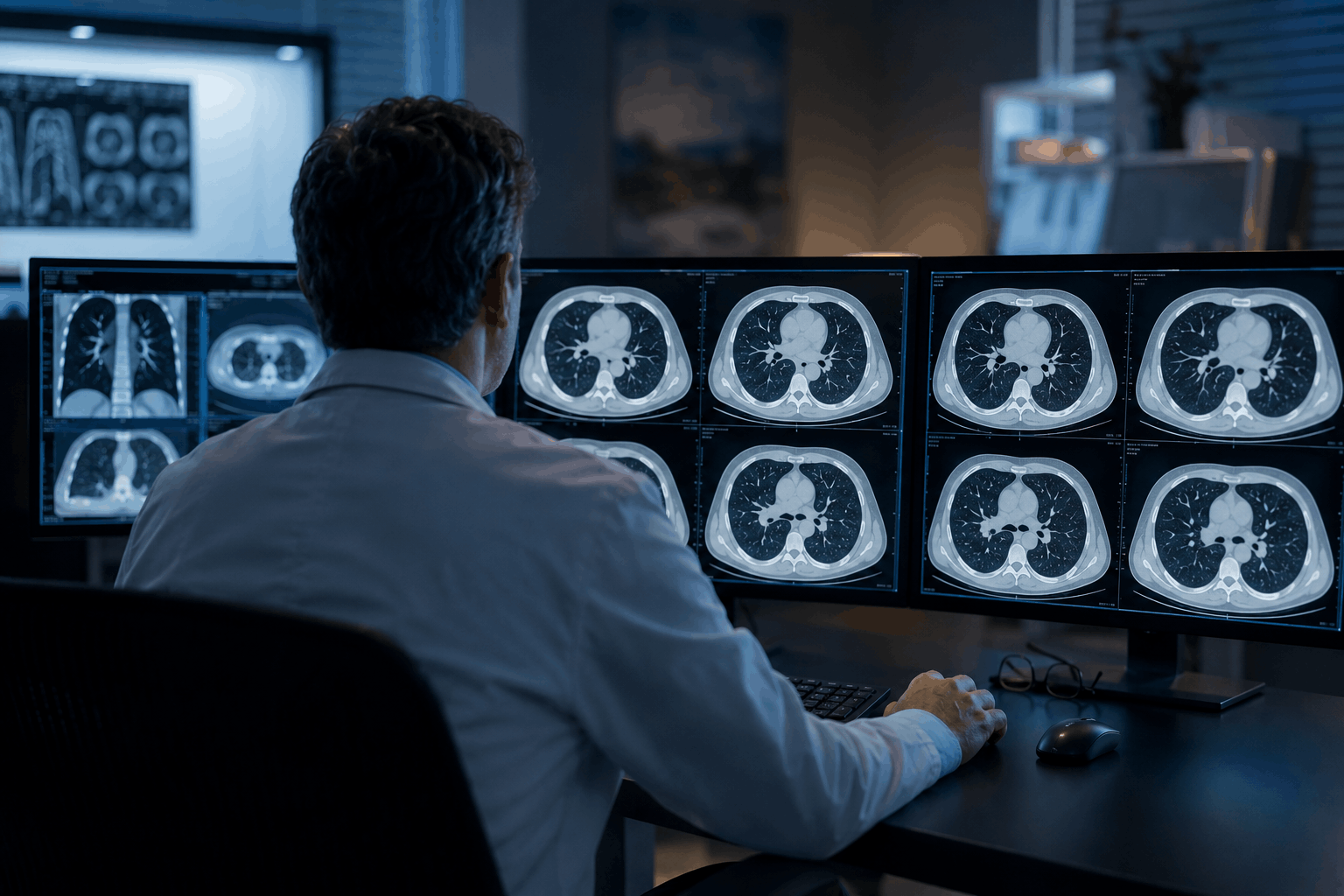
HRCT (High-resolution computed tomography) is a higher-level technology of CT which provides extremely thin-slice images of the lung. These thin slices detect other small functional abnormalities that a normal CT scan or chest X-ray would readily miss. The clarity of HRCT is crucial for diagnosing diseases that can be subtle, slow-growing, or complex.
The best part? HRCT is quick, painless, non-invasive and yields detailed results in minutes.
HRCT is considered the gold standard in modern diagnostic care, especially for chronic respiratory disorders. Little did one know!
Respiratory diseases can be tricky. Many of them present with similar symptoms:
A patient may think it’s asthma, while it could be fibrosis. Another person may assume it’s bronchitis, but deeper inside, it might be an interstitial lung disease. Hmm, yes, symptoms can be confusing.
HRCT helps distinguish between different lung disorders with high accuracy so that doctors can plan the right course of treatment.
Let’s review the most relevant conditions where HRCT is particularly important.
ILD is a set of disease processes that lead to scarring (fibrosis) of lung tissue. If taken, a regular X-ray may show some slight haziness but an HRCT can detail the specific pattern and extent of fibrosis. Clinically, this is important for physicians to
Patients will often say, “Hmm… but my chest X-ray looks fine.” The HRCT can identify early fibrosis that may go unnoticed.
COPD includes chronic bronchitis and emphysema, and assessment using HRCT allows identification of:
This is important for longterm management, inhalers and directives for lifestyle changes.
Bronchiectasis is a condition characterized by permanently widened, inflamed airways. Patients may say that they have
HRCT will demonstrate bronchiectasis, mucus plugging or damage to structures with outstanding precision. This will allow interventions to take place in a timely manner to prevent worsening conditions.
Pulmonary fibrosis is a condition of stiffness in the lung tissue will obstructs oxygen transfer.
HRCT detects:
Early detection is the key to slowing down the progression.
HRCT identifies:
The most important part is early recognition to slow disease progression.
While asthma is clinically diagnosed, an HRCT will assist in evaluating:
HRCT provides high-quality images to aid in appropriate management of asthma.
TB is endemic in India, and many patients develop long-term lung damage with scarring, cavitation, and bronchiectasis despite clinical treatment. HRCT can demonstrate:
These HRCT findings inform the clinicians follow-up plan for recovery.
People who are exposed to dust, chemicals, smoke, or industrial pollutants may develop occupational lung diseases. Examples include:
HRCT is the most accurate way to detect early structural change in all of these diseases.
After the HRCT has been completed and results available, physicians can plan:
Ultimately, HRCT provides direction for the entire treatment pathway.
Chronic lung diseases frequently have an indolent progression. Many patients ignore symptoms for years, thinking they merely have a cold, a dust allergy, or mild asthma. Hmm, indeed, this is quite common.
But early HRCT can do the following:
The earlier the diagnosis, the better the prognosis.
Patients choose Aarna Diagnostic Centre because of the combination of cutting-edge technology with compassionate care. This is where precision meets comfort.
Advanced HRCT Technology
The centre uses the latest CT systems that can produce extremely sharp, high-resolution images of the lungs, allowing the radiologist to detect even the smallest abnormality.
Low Radiation Techniques
Specialized low-dose scanning for HRCT reduces radiation exposure while maintaining excellent image clarity.
Experienced Radiologists
A specially trained team interprets the HRCT scans with precision, taking care to not miss a single detail.
A Patient-Centered Experience
The staff takes extra care to help the patient understand the process, reducing anxiety, and keeping the workflow smooth from scan to report.
Fast Reporting
The detailed reports are produced in record time so that doctors can start with the right treatment without any delay.
Commitment to Preventive Health
Early screening, health awareness, and ethics in medical practices are emphasized through this centre to maintain long-term community well-being.
You may need HRCT if you have:
If these symptoms sound familiar, it may be the right time to talk about HRCT with your doctor.
Chronic respiratory disorders demand attention, not assumptions. HRCT forms the cornerstone in the accurate diagnosis of chronic respiratory conditions, understanding their severity, and guiding effective treatment. If this advanced scan can be performed at the right time, it will spare the patient from years of suffering and make it easier to breathe.
If you or a loved one has persistent symptoms of respiratory diseases, hmm… don’t neglect it. An HRCT scan at Aarna Diagnostic Centre will bring clarity, direction, and peace of mind. Better diagnosis ensures better recovery, and the best care is due to your lungs.
Convenient Tests right at your Doorstep!


86, Kargi – Patel Nagar Bypass, near Palm City, Adarsh Vihar, Brahmanwala, Dehradun, Uttarakhand 248001
1, Maharani Bagh Lane, Ballupur Chowk, Ashirwad Enclave, Ballupur, Dehradun, Uttarakhand 248001
1, Chakrata Rd, near Rohan Motors, Selakui, Central Hope Town, Uttarakhand 248011
F-7, Haridwar Road Nehru Colony Dehradun, Uttarakhand 248001 India
Leave a Comment