

Even though the world has slowly moved forward from the intense waves of COVID-19, many people continue to experience lingering health issues, especially those related to the lungs. Hmm, yes, if you’ve recovered from COVID but still feel breathless, tired, or unable to return to your old stamina, you’re definitely not alone. Across India, thousands of patients are facing what doctors now call Post-COVID Lung Complications or Long COVID.
One of the most reliable tools to understand these ongoing problems is HRCT (High-Resolution Computed Tomography) of the chest. Many patients often ask, “Do I really need an HRCT now that I’ve recovered?” And honestly, the answer depends on your symptoms. But when required, HRCT becomes absolutely essential because of the clarity it provides.
Let’s explore this step by step, human to human.
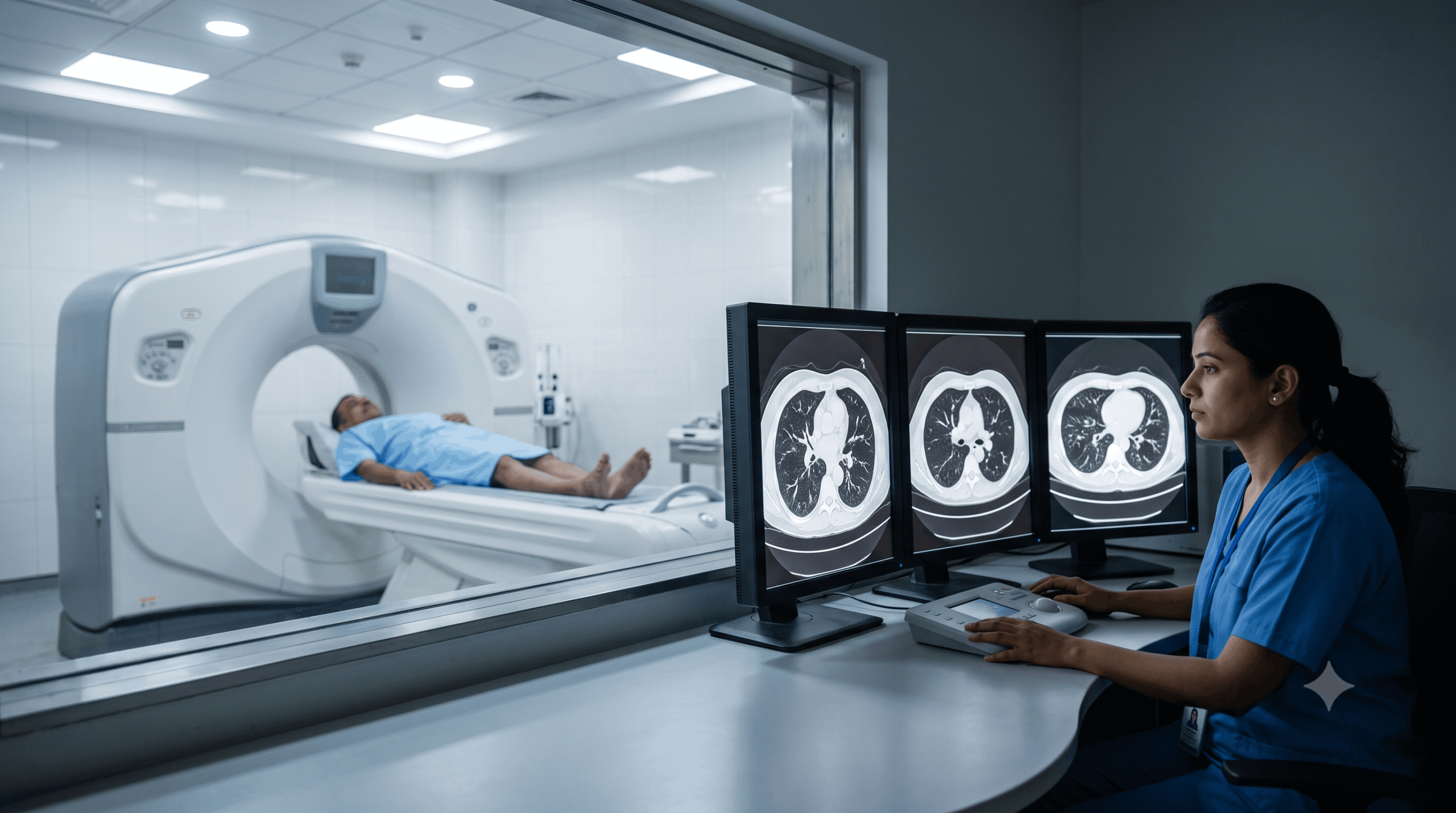
HRCT is a type of CT scan that is advanced and intended to demonstrate a detailed image of your lungs. It uses thin-slice imaging to show high detail, including lung tissue and the smallest structures. While regular X-rays may not show subtle abnormalities, an HRCT shows a wide and exact view of lung health. This is very important after your COVID infection.
And don’t worry, HRCT is quick, painless, and non-invasive. You simply lie down, hold your breath for a few seconds, and the scanner does the rest.
HRCT is a type of CT scan that is advanced and intended to demonstrate a detailed image of your lungs. It uses thin-slice imaging to show high detail, including lung tissue and the smallest structures. While regular X-rays may not show subtle abnormalities, an HRCT shows a wide and exact view of lung health. This is very important after your COVID infection.
And don’t worry, HRCT is quick, painless, and non-invasive. You simply lie down, hold your breath for a few seconds, and the scanner does the rest.
COVID-19 primarily attacks the respiratory system, causing inflammation in the lungs. In many cases, the infection heals completely. But in some individuals, the virus leaves behind subtle damage like scars or persistent inflammation that normal X-rays cannot detect.
Some common post-COVID lung symptoms include:
If any of these feel familiar, hmm… it might be time to get your lungs checked.
COVID’s long-term effects can sometimes lead to:
An HRCT identifies all of these with accuracy.
Many patients appear fine externally but still struggle internally. HRCT picks up tiny abnormalities such as micro-scar formations, early fibrosis, patchy inflammation, small blood clots and areas of reduced air exchange. These changes are not visible on a standard chest X-ray, making HRCT a more reliable diagnostic tool.
Doctors often advise HRCT when they want to compare lung images over time. A follow-up HRCT shows whether lung inflammation is resolving, whether scarring is stable, improving, or progressing, and whether new abnormalities are developing. This helps your healthcare provider plan the next steps, whether it’s medication, breathing therapy, or lifestyle modifications.
It is important to understand that not every post-COVID issue is necessarily caused by COVID. Sometimes breathlessness could be related to a history of asthma, old COPD, cardiac issues, allergies, or various types of infection. HRCT allows us to distinguish these different conditions precisely so that you can receive the best treatment and avoid medication that is unnecessary.
We plan a treatment course based upon the findings of the HRCT and with respect to how you are feeling. This may involve anti-inflammatories, pulmonary rehabilitation exercise, with steroids if warranted, breathing techniques, posture management and other lifestyle modifications. HRCT assists in determining if the lungs require more aggressive measures, or if supportive measures will suffice.
Certain individuals are at higher risk for developing long-term lung damage following COVID, including heavy smokers, patients with diabetes, and with mild-moderate asthma or COPD on their chart, the elderly and those with moderate to severe COVID or have required hospitalization. HRCT becomes even more important in these high-risk patients as it allows for unique insights into imaging findings enabling early detection and prevention of long-term complications.

Some common findings include:
These appear like hazy patches in the lungs and indicate inflammation.
These are signs of early scarring that require monitoring.
Suggests inflammation in airways.
Seen in more advanced fibrosis.
COVID increases the risk of blood clots, and HRCT angiography helps identify them.
HRCT does not just “show images”, it tells a story about how your lungs have healed and what they still need.
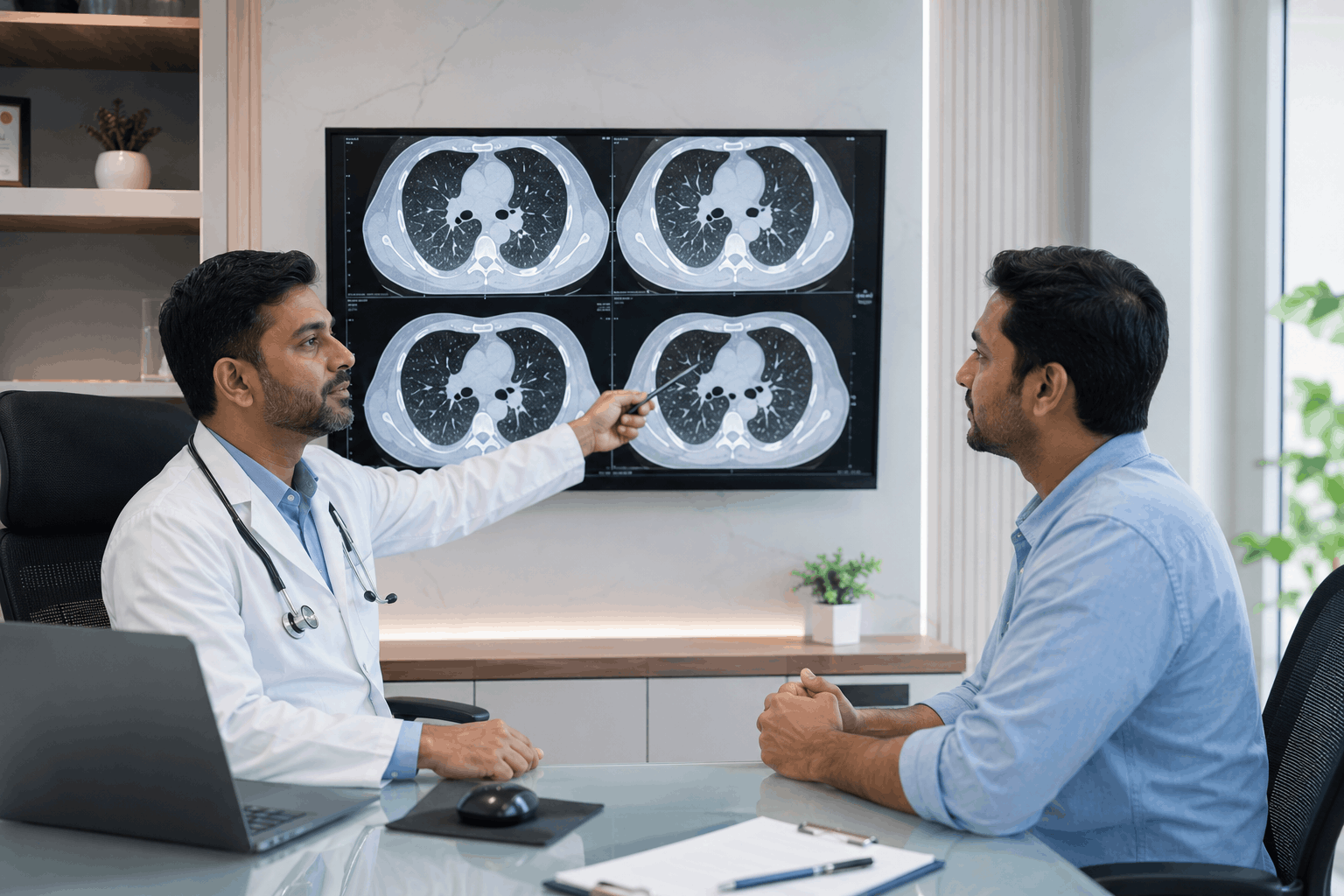
Many patients wait too long, hoping their symptoms will fade naturally. Hmm, sometimes they do, but sometimes they don’t. Delaying HRCT may cause missed opportunities for early treatment.
Early detection means easier treatment and better recovery. That’s the biggest reason HRCT is recommended at the right time.
Aarna Diagnostic Centre offers compassionate care with state-of-the-art technology. This is where patient comfort meets safety and precision.
Here’s why the experience is unique:
High-Resolution CT Systems
The Centre has advanced CT technology that produces excellent quality lung images, reducing scan time and increasing safety.
Lower Radiation
Innovative scanning techniques ensure that patients receive the least exposure to radiation without compromising quality.
Radiologist Expertise
Our radiologists have the expertise in achieving accurate interpretation of HRCT images ensuring no subtle abnormalities go unnoticed.
Patient-Centric
The staff is trained to manage patient anxieties, educate and ensure that every step of the process is comfortable.
Prompt Reporting
Reports are generated in a timely fashion providing your doctor prompt access to help facilitate treatment.
Commitment to Preventative Healthcare
The Centre is committed to the importance of early detection and the need to educate the public – as this contributes to healthier communities and long term wellness.
You might benefit from an HRCT if you have had:
A physician may also suggest HRCT for prospective management after an infection has been moderate or more severe.
COVID may have left your body, but its aftereffects can be undetectable. An HRCT will help to see clearly what is going on in your lungs, and the value of this is important in order to intervene, promote long-term pulmonary health, and avoid unnecessary anxiety.
If you (or someone that you may know) are grappling with persistent post-COVID symptoms, hmm… do not just let it be. A simple HRCT can provide answers, recommendations, and reassurance.
For safe, reliable, and compassionate HRCT assessment, you can trust the skills of the dedicated faculty and advanced imaging technologies at Aarna Diagnostic Centre. Your lungs and long-term health deserve the best.
Convenient Tests right at your Doorstep!


86, Kargi – Patel Nagar Bypass, near Palm City, Adarsh Vihar, Brahmanwala, Dehradun, Uttarakhand 248001
1, Maharani Bagh Lane, Ballupur Chowk, Ashirwad Enclave, Ballupur, Dehradun, Uttarakhand 248001
1, Chakrata Rd, near Rohan Motors, Selakui, Central Hope Town, Uttarakhand 248011
F-7, Haridwar Road Nehru Colony Dehradun, Uttarakhand 248001 India
Leave a Comment